- VIAC
-
ARBITRATION
- Arbitrate at VIAC
- VIAC eCase
- Combination of Arbitration and Mediation
- International Arbitration
- Resources
- NEWS & EVENTS
- Contact
-




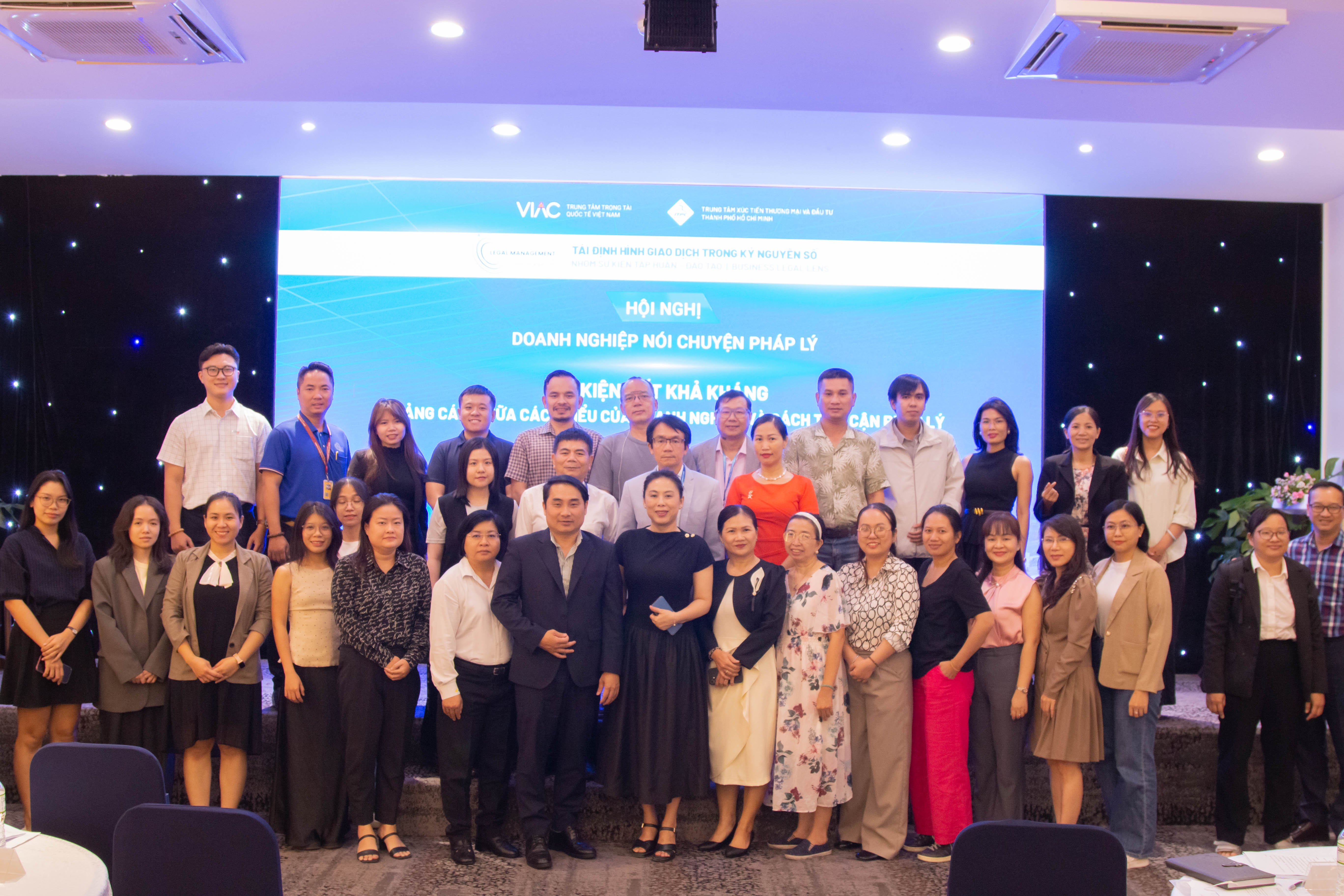
On the morning of 22 August 2026, in Ho Chi Minh City, the Vietnam International Arbitration Centre (VIAC), in coordination with the Ho Chi Minh City Investment and Trade Promotion Centre (ITPC), organised the Roundtable discussion Business Legal Lens (BLL) #02 themed “Force majeure: The gap between business understanding and legal approach”, with the participation of more than 70 delegates representing various enterprises. This event was held within the framework of Legal Management Series 2026 in Ho Chi Minh City (LMS 2026), featuring topics related to commerce and logistics.
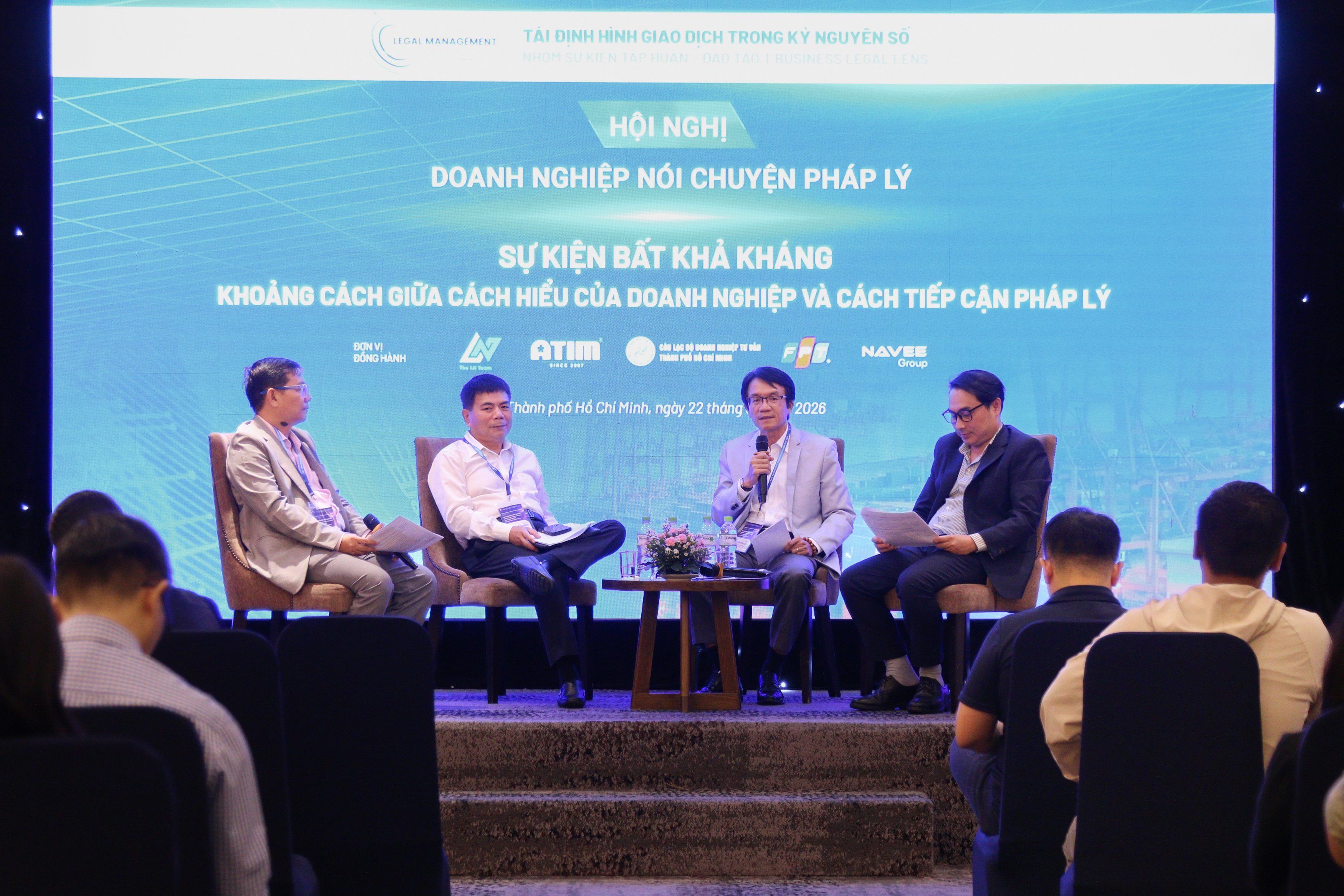
The roundtable discussion was moderated by Mr. Chau Viet Bac – Deputy Director of the Vietnam International Arbitration Centre (VIAC) and Standing Deputy Director of the Vietnam Mediation Centre (VMC). The speakers participating in the roundtable discussions at the discussion included Mr. Le Thanh Kinh – Managing Partner of Le Nguyen Law Firm, VIAC’s Listed Arbitrator, VMC’s Mediator; Mr. Tran Viet Anh – Chairman of the Vietnam Waste Recycling Association, Vice Chairman of the Ho Chi Minh City Union of Business Associations (HUBA), Honorary Consul General of Pakistan in Ho Chi Minh City, and VIAC’s Listed Arbitrator; and Mr. Nguyen Phi Khanh – General Director of Mass Worldwide Logistics Ocean (Vietnam).
"Not every business difficulty or disruption can be considered a force majeure event."
Opening the Legal Insight talk, Mr. Le Thanh Kinh emphasized that not every business hardship or market fluctuation qualifies as a force majeure event. To be successfully invoked, an event must fully satisfy the following conditions: (i) it occurs objectively; (ii) it is unforeseeable; (iii) it is insurmountable despite the application of all necessary measures; and (iv) it is the direct cause preventing a party from performing its contractual obligations. Accordingly, the party invoking force majeure bears the burden of proof regarding these conditions should a dispute arise. The speaker also highlighted the distinction between force majeure and a fundamental change of circumstances; enterprises should clearly stipulate resolution mechanisms for each scenario, particularly the right to request contract renegotiation. In international transactions, the assessment of the same event may vary depending on the governing law; therefore, this issue must be carefully addressed right from the contract drafting stage.
Drawing from practical experience in the logistics sector, Mr. Nguyen Phi Khanh asserted that if an enterprise still has alternative options to perform its obligations, even if such alternatives incur additional time or costs, the event may merely be deemed a commercial risk. He cited a case where a border gate is closed, yet the enterprise could still transport goods via a third country. For proactive risk management, enterprises may also incorporate standard industry business terms by reference into their transactions. Elaborating on the “unforeseeable” criterion, Mr. Chau Viet Bac raised the issue of scenarios where the risk of conflict had been forewarned or announced in advance by the media. Citing an international dispute involving the closure of the Suez Canal due to war, Mr. Le Thanh Kinh noted that the outbreak of war or conflict does not automatically constitute grounds for exemption from liability; the critical factor is proving a direct causal link between the event and the affected contractual obligation.
“In many instances, enterprises must strike a balance between safeguarding their interests in a specific contract and maintaining their supply sources, client base, and business partnerships."
According to him, the decision of whether to invoke force majeure depends not solely on legal grounds, but in many instances, is also tied to the respective bargaining power of the parties and the objective of maintaining long-term business relations. Therefore, enterprises must often strike a balance between safeguarding their interests in a specific transaction and the imperative to retain supply sources, clientele, and partnerships. On this premise, Mr. Viet Anh suggested that before resorting to adversarial measures such as litigation or arbitration, parties should prioritize communication, negotiation, and seeking mutually accommodating solutions if practical conditions permit. Accordingly, the invocation of force majeure should be integrated into the overall strategy for managing contractual relations, rather than being perceived merely as a basis for exemption from liability. Offering further insights from a legal advisory perspective, Mr. Le Thanh Kinh emphasized that Vietnamese enterprises must pay closer attention to reviewing, negotiating, and structuring contracts right from the initial stage. A clearly drafted clause, tailored to the specific nature of the transaction, not only enables the parties to pre-determine resolution mechanisms for unforeseen events, but also establishes the requisite foundation for enterprises to safeguard and substantiate their rights should a dispute arise.

During the Legal Clinic, the speakers directly addressed various practical scenarios raised by enterprises. Regarding cases where goods are delivered under Incoterms 2020 rules but fail to reach the port of destination due to disrupted maritime transport routes, the speakers noted that the determination of liability must be based on the point of risk transfer, relevant shipping documents, and the specific agreement between the parties. In practice, alongside establishing legal liability, enterprises often opt for mediation to share losses and explore options for payment recovery before resorting to a more adjudicatory dispute resolution method.
Concluding the program, exchanges from the perspectives of import-export enterprises, logistics providers, legal expert, and arbitrator clarified the distinction between the layman’s understanding of “force majeure” and the legal requirements imposed when invoking this mechanism. Accordingly, the speakers recommended that enterprises proactively and clearly draft clauses on force majeure and fundamental change of circumstances, establish protocols for notification and evidence retention, and concurrently consider appropriate negotiation and mediation methods when unforeseen events arise.
_____________________________
See other Business Legal Lens (BLL) under LMS 2026:
 | Finance Sector | Business Legal Lens: Conditions precedent in loan agreements: Understanding correctly to prevent risks |
![[Recap LMS 2026] VIAC & ITPC co-organized the Business Legal Lens (BLL) #01: “Conditions precedent in loan agreements: Understanding correctly to prevent risks”](/images/News-and-Events/2026/News/LMS 2026/BLL 01/IMG_8873.jpg)
![[Recap LMS 2026] Talkshow “Exemption from liability for technology-related risks in logistics transactions”](/images/News-and-Events/2026/News/LMS 2026/Logistics/LMS2026_2708---Slideshow-1.jpg)
![[Recap LMS 2026] Talkshow “Commercial contracts with counterpart clauses – Streamlining contract formation or increasing legal risks?"”](/images/News-and-Events/2026/News/LMS 2026/Thuong mai/LMS2026_2008_Speakers.png)
![[Recap LMS 2026] Talkshow “Arbitral jurisdiction in resolving disputes arising from digital financial transactions"](/images/News-and-Events/2026/News/LMS 2026/Tai chinh/LMS2026_260813__Backdrop.png)
![[LMS 2026] VIAC and ITPC successfully co-organized the Conference on: “Digital transformation in logistics transactions: Implementing a hybrid model in the transitional phase”](/images/News-and-Events/2026/News/LMS 2026/IMG_6536.JPG)
![[LMS 2026] VIAC and ITPC successfully co-organized the Conference on: “Digital transformation in sale of goods transactions: From partial to comprehensive”](/images/News-and-Events/2026/News/LMS 2026/IMG_9941.png)



.png "Trường đại học ngoại thương")